One system for purchasing, production, warehouse and shipping.
Instead of paper, spreadsheets and verbal handovers between departments: documents move by rules, everyone sees what their job needs, and management follows production from a phone. That is how the system we built for Rudex, an explosives manufacturer, works.
What the system runs
Purchasing
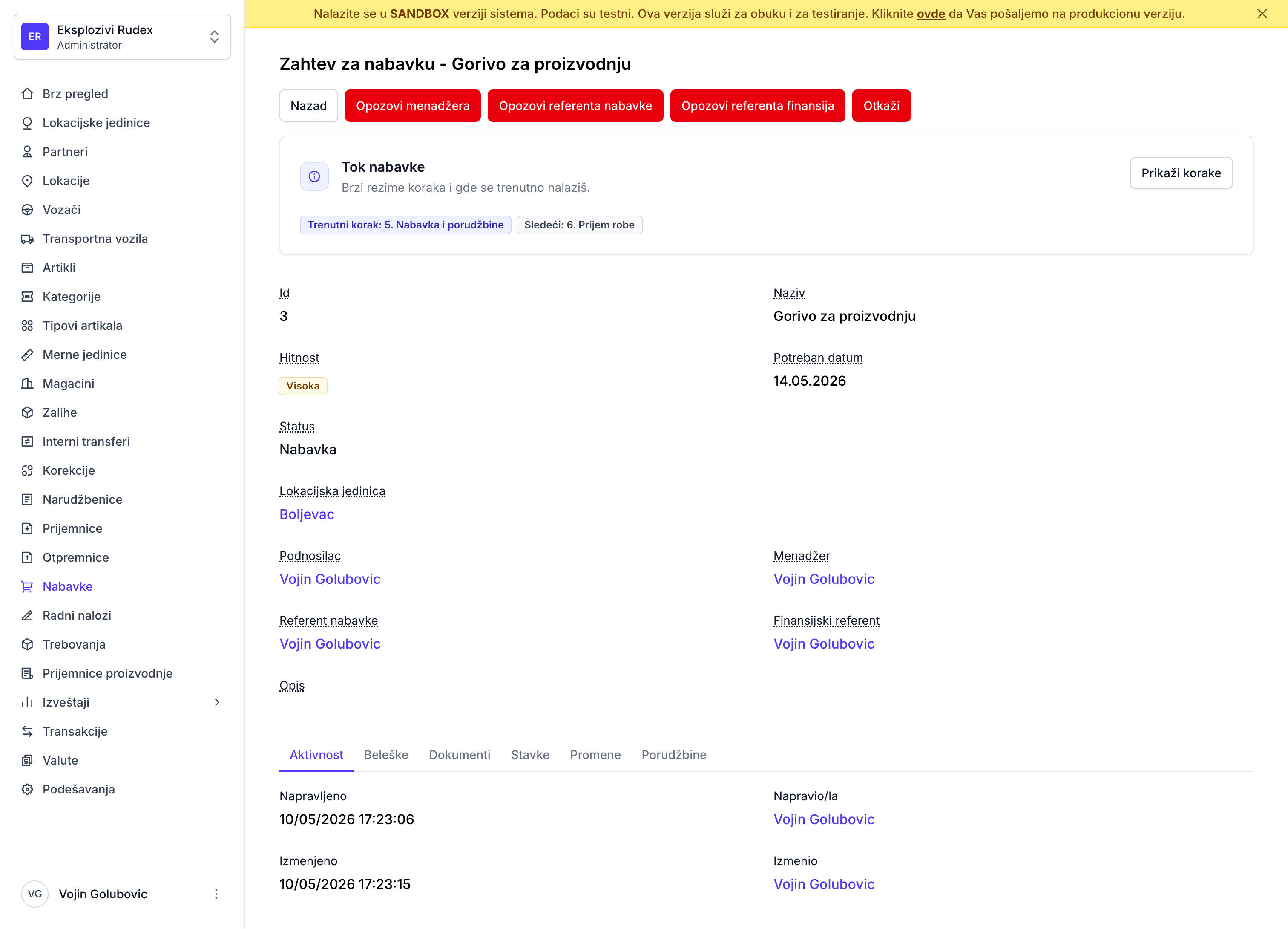
A purchase request becomes an order to the supplier, and the warehouse receives goods against it.
Production and bills of materials
A work order consumes material by its bill of materials, and finished goods go into stock.
Shipping
The delivery note sends goods to the customer with a vehicle and driver and comes out as a PDF from the same record, so nobody retypes it.
Roles and oversight
Everyone sees only what their job needs. Management opens the same system on a phone and follows production, stock and shipping.
Paper and spreadsheets, or one system
Without a system
- Departments hand work over by word of mouth.
- The same data is typed in three or four times along the chain.
- Reports wait for someone in the office to put them together.
- Every new hire adds coordination.
With one system
- Documents move between departments by the system's rules.
- Data is entered once; PDFs come out of the same record.
- Management follows production, stock and shipping on a phone.
- Every step in the chain is on record and can be checked.
We build the system around how your company works, down to each role and action, not the other way round.
How it works at Rudex
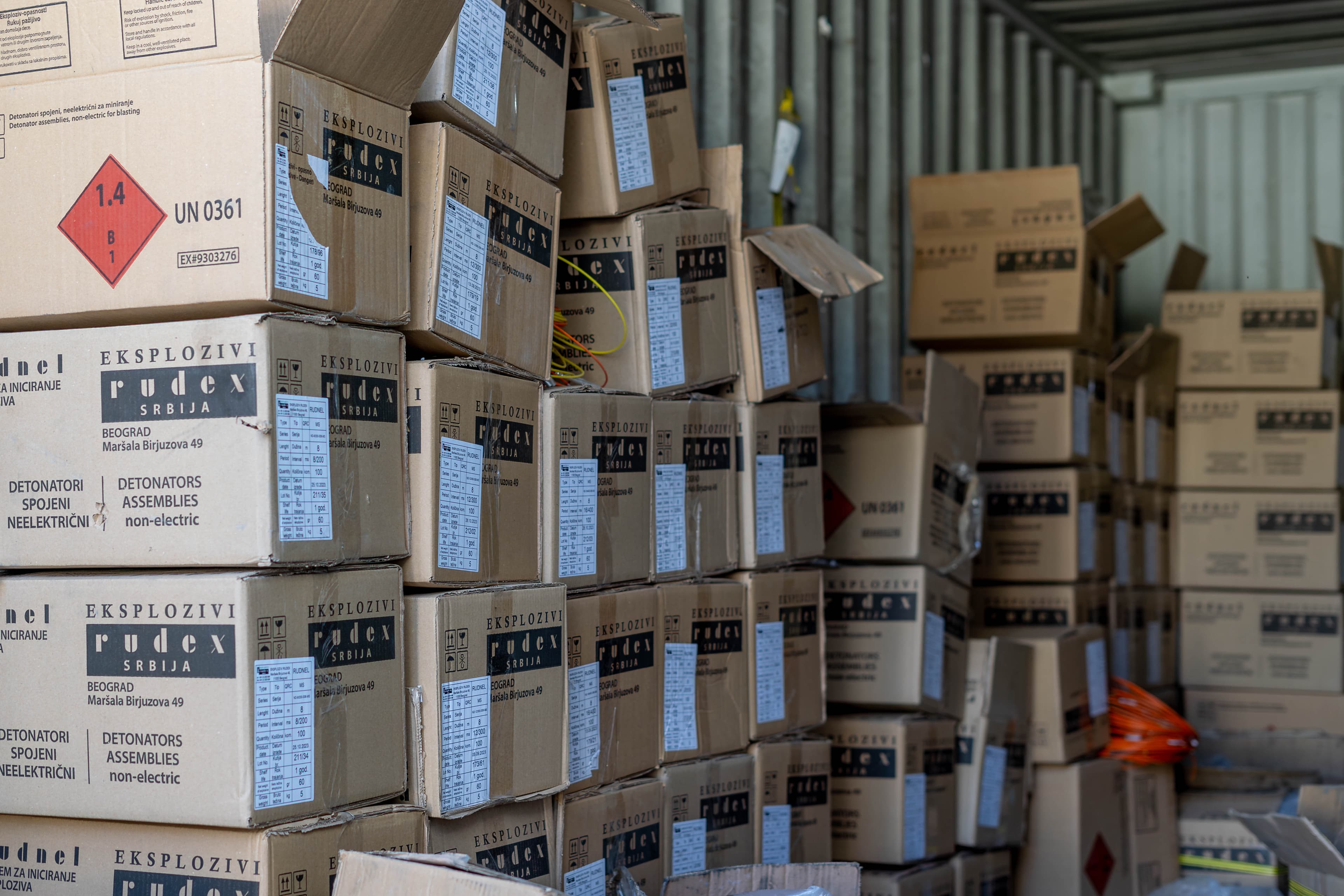
Rudex makes explosives, so every procedure has to be auditable and compliant. The system runs purchasing, production, the warehouse and finance, and replaced the paper, scanned PDFs and spreadsheets of four departments. With it, Rudex grew from about 200 to 300+ employees without management growing to match.
- employees, up from 200, with no growth in management
- 300+
- departments moved from paper and spreadsheets to one system
- 4
Already have accounting software?
You don't have to replace it. For Rudex we built a small tool that turns bank statements into a file their accounting software imports directly, and the accounting system did not change. We connect to what already works.
Three steps before any code.
- 01
A free first conversation
Tell us what breaks and what it costs you. We reply within one business day.
- 02
Options, not a pitch
We break the problem into parts and propose the ones worth building, each with a price band. You pick.
- 03
Progress every week
We ship in small pieces so you see it working early, and we stay on after launch.
Common questions
- Do we have to move everything at once?
- No. We start with the part that costs you most and add the rest once it is stable. Rudex's system grew version by version.
- What if our process isn't standard?
- We sit with people in each department and model the work as it actually happens. Every paper form is a trace of a process the system should take over.
- We work in a regulated industry. Can the system keep up?
- Rudex makes explosives. Every step in the chain is on record, and we close the edge cases before development, because a mistake in a live system is not acceptable.
- What does it cost?
- It depends on how much of the company the system covers. After the first call you get a written proposal split into parts, each with its own price range.
Running production on paper and spreadsheets?
Tell us what you make and where the work gets stuck. We'll tell you what we would build.